California Insurance & Your Santa Ana Roof — 2026 Guide
In March 2026, ABC7 ran a story about a Santa Ana homeowner named Linda Bennett who got a letter from State Farm threatening to drop her policy. Her roof wasn’t leaking. There was no visible damage. A drone had photographed it and the AI flagged granule loss. That story is playing out on streets across every Santa Ana zip code right now. This page tells you exactly what's happening, what your options are, and what actually works. Our written roof inspection report is formatted specifically for OC insurance submissions.
What's Actually Happening With California Homeowners Insurance and Roofs in 2026
California insurers are non-renewing homeowner policies at a rate nobody in this state has seen before. State Farm, Allstate, Farmers — all of them announced statewide pullbacks between 2023 and 2025. For Santa Ana homeowners specifically, the roof has become the single most common trigger for non-renewal notices in 2026. This guide applies specifically to homeowners doing roofing in Santa Ana and Orange County, CA.
Santa Ana zip codes 92701, 92703, 92704, 92705, 92706, 92707, and 92708 are among the most affected in Orange County. Homeowners in Floral Park, Delhi, South Coast Metro, Willard, Washington Square, Meredith Parkwood, Cabrillo Park, and French Park are all receiving non-renewal notices at higher rates than the California average — primarily due to roof age and wind exposure from the Santa Ana and Diablo wind corridors.
Here's how it works: major insurers now use AI-powered drone imagery — contracted through companies like Cape Analytics and EagleView — to inspect roofs remotely without ever stepping on your property. The software flags granule loss on asphalt shingles, debris accumulation in valleys, moss or algae staining, delamination at ridge caps, and overall surface wear. When it flags your roof, you get a letter. The letter says: fix it, provide proof you fixed it, or your policy won't be renewed.
A 15-year-old asphalt shingle roof in Floral Park, Delhi, or South Coast Metro — even one with no active leaks and no structural issues — can trigger this. The drone doesn't know if it's leaking. It knows what the surface looks like from above. And in Santa Ana's climate, a 15-year-old shingle roof looks old from above even when it's still functioning.
What a Non-Renewal Letter Actually Means — And How Much Time You Have
A non-renewal letter is not a cancellation. You have time — but not unlimited time. California law requires insurers to give you at least 45 days' notice before a non-renewal takes effect. If the letter cites a specific condition — including roof condition — you have that window to address it, provide documentation, and potentially have the decision reversed.
What to Do the Day You Get the Letter
- Read it carefully. Find the specific reason stated. It may say “roof condition” or cite a specific inspection date and finding.
- Note your deadline. Count 45 days from the date of the letter, not the date you received it.
- Do not call your insurer first. Get a professional inspection from a licensed roofing contractor before you call anyone. You need documentation in hand before the conversation.
- Get a written inspection report from a CSLB C-39 licensed contractor with photos, condition assessment, and an estimated remaining useful life statement.
- Submit the report to your insurer's underwriting department — not just your agent. Ask specifically whether the report satisfies their requirements for policy continuation.
What the Roof Inspection Report Needs to Include
Not all inspection reports satisfy insurer requirements. Insurance underwriters are specifically looking for documentation that directly addresses the concerns the AI flagged. A generic “roof looks fine” letter from a handyman won't do it. Here's what a report that actually works needs to contain:
Required in the Report
- Contractor name, CSLB C-39 license number, and company contact
- Property address and inspection date
- Date-stamped photographs of all roof surfaces — top, eave, ridge, valleys
- Condition assessment by material type (granule coverage, surface integrity)
- Flashing condition at all penetration points
- Underlayment status (accessible areas)
- Estimated remaining useful life in years
- Statement that the roof meets or exceeds current building standards for its age
What Strengthens the Report
- Photos of specific areas the AI drone flagged, with written contractor assessment
- Any recent maintenance records (gutter cleaning, debris removal, valley cleaning)
- If underlayment was recently replaced — the permit record from Orange County
- Contractor letterhead with C-39 license number visible
- Explicit statement about granule retention and surface condition
- Reference to the 2025 California Building Standards Code where applicable
If Repair or Replacement Is Needed — What Satisfies Insurers
If the inspection finds that your roof does need work to satisfy insurer requirements, the documentation path matters as much as the work itself. Here's what actually closes the loop with an insurance underwriter:
- Get a written repair or replacement estimate — itemized, from a CSLB C-39 licensed contractor.
- Pull the Orange County permit. For any replacement — required. For repairs over 100 sq ft — required. The permit record is your legal proof the work was done to code.
- After completion, get a final inspection certificate — your contractor should provide a signed completion letter with the OC permit number and final inspection date.
- Submit the completion package to your insurer — before your 45-day window closes: the initial inspection report, the work completion letter, and the permit record.
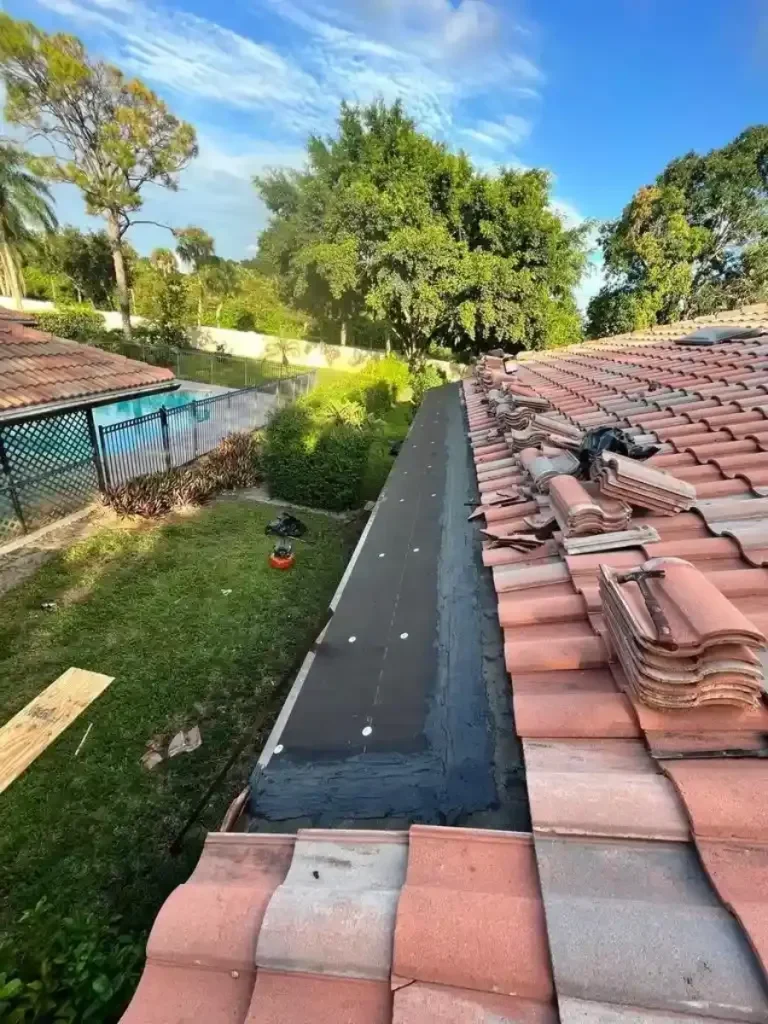
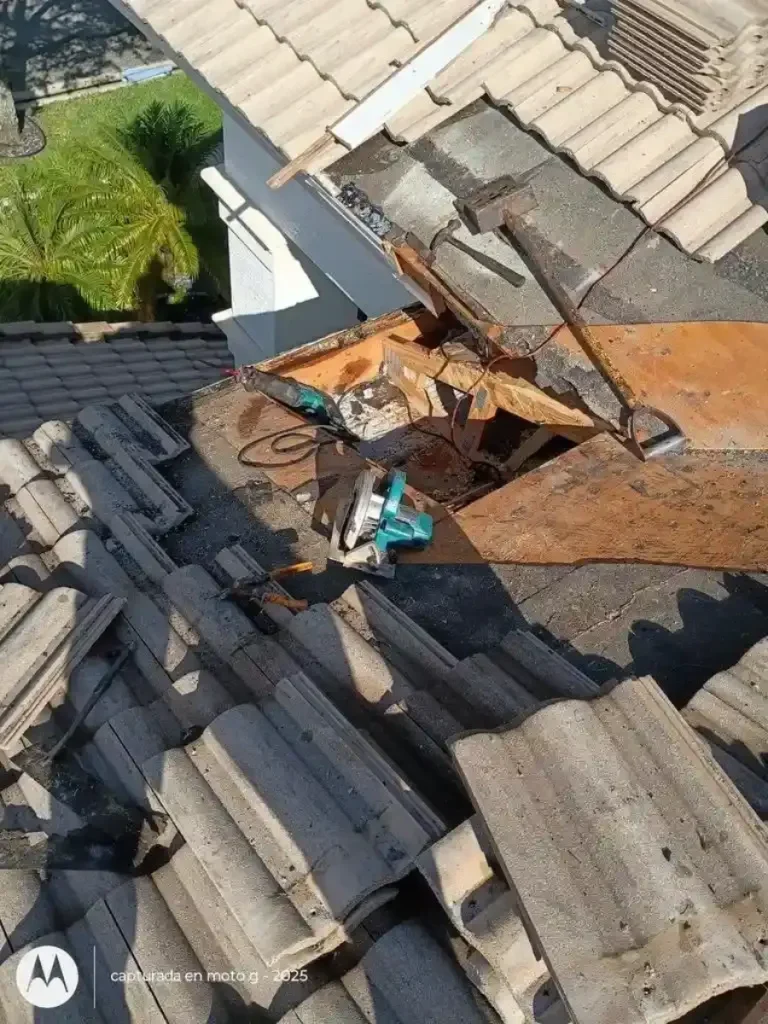
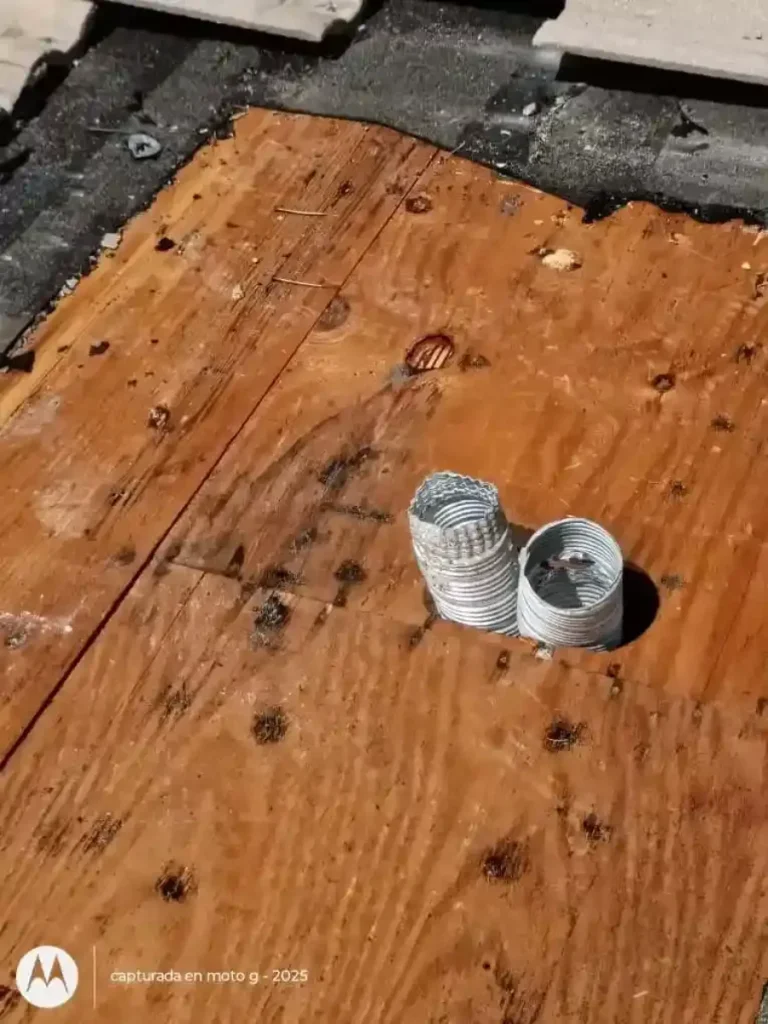
One thing that surprises homeowners: for tile roofs, underlayment replacement counts as meaningful renovation in the insurer's eyes — even though the tile itself stays in place. A tile roof where the underlayment has been recently replaced with a new OC permit on file is a very different submission than an uninspected 25-year-old roof. If your tile roof is over 15 years old and the underlayment has never been replaced, that job alone can satisfy many insurer requirements.
The CA FAIR Plan — What It Is and Why You Want to Avoid It
The California FAIR Plan is the state's insurer of last resort — designed for properties that standard insurers won't cover. If you lose your homeowner's policy because of roof condition and can't find replacement coverage, the FAIR Plan is your fallback. But it's significantly more expensive than standard coverage, provides basic fire coverage only (not comprehensive homeowner coverage), and requires a separate “Difference in Conditions” (DIC) policy to fill the coverage gaps.
Homeowners in Floral Park and South Coast Metro with higher-value properties are especially exposed — FAIR Plan coverage caps may not adequately cover a $700K–$800K Santa Ana home. The goal is always to satisfy your current insurer's requirements or find a standard replacement carrier, not to end up on FAIR Plan. A documented roof inspection or completed roof work is the most direct path back to standard coverage eligibility.
Roof Age by Material — What Insurers Are Actually Looking At
Asphalt Shingles
10–15 Years
Most common trigger age for non-renewal. Drone flags granule loss visibly at this age in SA's UV-intense climate.
Clay / Concrete Tile
Tile: 50yr+ / Underlayment: 15–20yr
Tile tile itself rarely triggers issues. Insurers flag underlayment age. Replacement of underlayment with permit is a strong submission.
Metal Roofing
Rarely Flagged
40–60yr lifespan means almost never triggers non-renewal issues. One reason metal is gaining market share in OC.
California Roof Insurance FAQ
Can my insurance company drop me just because of my roof’s age?
Yes — in California, insurers can non-renew a policy citing roof condition or age as long as they provide proper notice (minimum 45 days). This became significantly more common in 2024–2026 as major insurers used it to reduce exposure across the state. There is no California law that prevents non-renewal based on roof condition. Your leverage is in demonstrating current condition through documented inspection — not in disputing their right to non-renew.
My roof isn’t leaking — why is my insurance flagging it?
Insurance companies are no longer evaluating roofs based on whether they're leaking. AI-powered drone imagery from companies like Cape Analytics and EagleView evaluates surface condition — granule retention on asphalt shingles, debris accumulation, visible staining, ridge cap condition. A roof that doesn't leak but shows surface aging gets flagged the same way. The insurer's concern is future risk and replacement cost — not current functionality.
How much does a roof inspection certificate cost in Santa Ana?
Our inspections are free for Santa Ana homeowners. The written inspection report suitable for insurance submission is included. Some contractors charge $150–$350 for a formal written report — if you're getting a quote from someone else, ask upfront whether the written report for insurer submission is included in their inspection fee.
If I replace my roof, will my insurance company reinstate my policy?
There is no guarantee — but a documented full replacement with an Orange County permit, a final inspection sign-off, and a licensed contractor's completion letter significantly improves your position with most insurers. For homeowners who lost coverage and want to return to standard market rates, a new roof with full documentation is the strongest possible submission. Some insurers will reinstate. Others who have made a strategic decision to exit California will not — in which case the documentation still positions you for replacement coverage with a different standard carrier.
What if I’m already on the CA FAIR Plan — can a new roof get me back to standard coverage?
It can help substantially. A new roof or documented major renovation (underlayment replacement with permit) improves your risk profile in the eyes of standard market insurers. Work with an independent insurance broker who has access to non-admitted or surplus lines carriers — they have more flexibility than captive agents tied to a single company. Bring your OC permit record and completion documentation to that conversation.
Get a Written Inspection Report for Your Insurer
Free inspection. Written report with photos, condition assessment, and remaining life statement — formatted for insurance submission. CSLB C-39 Licensed · Serving all Santa Ana zip codes: 92701 · 92703 · 92704 · 92705 · 92706 · 92707 · 92708