Santa Ana Winds Roof Damage — The Complete Guide
The winds are named after this city. Most homeowners treat them like a rainstorm — something to wait out. That's the wrong mental model. A rainstorm saturates. The Santa Ana winds dehydrate, pull, and fracture. The damage pattern is completely different, and if you don't understand it, you end up with problems you won't find for another six months. If your roof was damaged by Santa Ana winds, Santa Ana roofers provides same-day emergency response during wind season.
Why Santa Ana Winds Damage Roofs Differently Than Any Other Weather Event
The National Weather Service Los Angeles office classifies Santa Ana wind events as a distinct meteorological phenomenon — a katabatic wind system originating in the Great Basin and Mojave Desert. Here's the physics that matters for your roof: If your roof was hit by Santa Ana winds, roof repair is available same-day during wind season.
Air descends from the interior plateaus, compresses adiabatically as it drops in elevation, and arrives in the Santa Ana River basin and coastal lowlands hot, dry, and moving fast. Relative humidity drops below 10%. Wind speeds sustain at 40–60 mph with gusts recorded at 80+ mph in the Santa Ana Canyon and the corridor along the Santa Ana River basin. This combination does four things to roofing materials that rain simply doesn't:
1. Dehydration
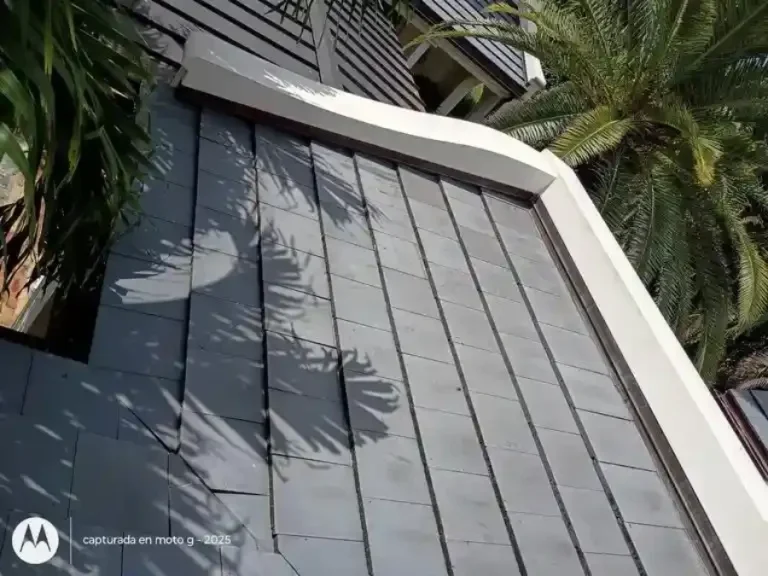
Asphalt shingles lose moisture and become brittle. They crack under pressure rather than bending. Wooden fascia boards, ridge caps, and rafter tails shrink. Caulk around flashings stiffens and splits. All of this happens in hours — not years.
2. Uplift Pressure
High-velocity wind creates a pressure differential at the eave overhang — negative pressure above the surface, positive below. This acts like suction from beneath, pulling shingles and tiles upward. A 4-nail shingle installation resists this poorly. A 6-nail pattern significantly improves resistance.
3. Debris Impact
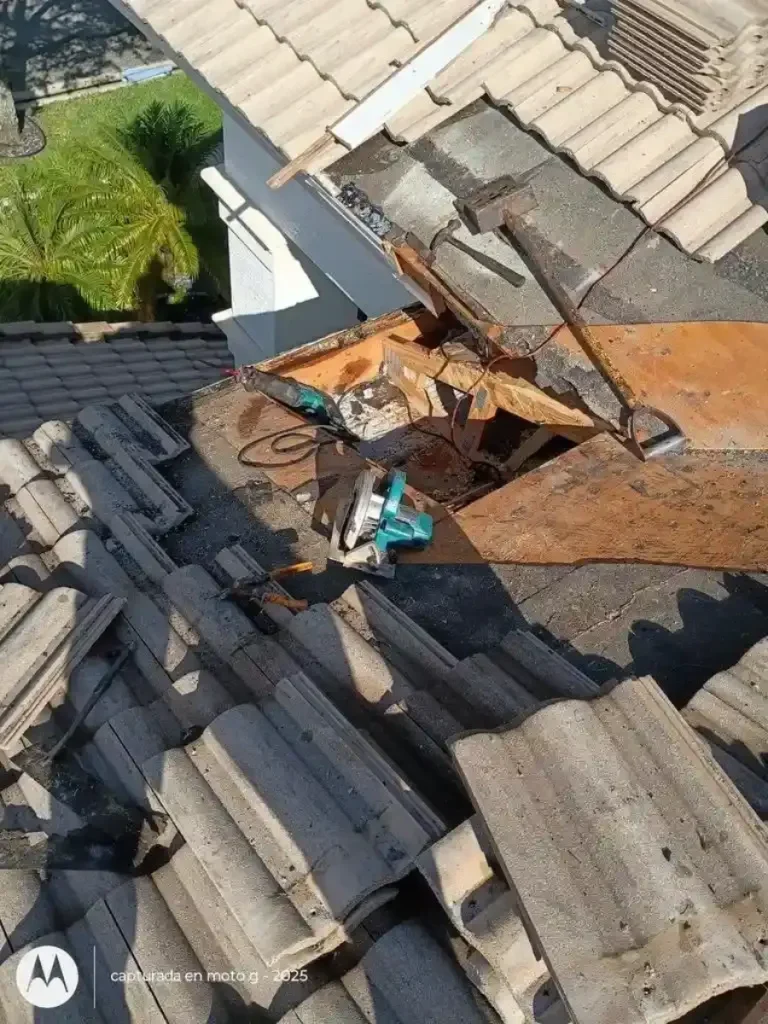
The same dry conditions that dehydrate shingles also desiccate trees and branches. Dry palm fronds, eucalyptus branches, and pine debris travel at speed. Impact on tile cracks units. Impact on shingles punctures or tears granule coating. Gutters fill with debris, overload, and pull away from fascia boards.
4. Seal Failure
Shingles have a self-sealing strip that bonds them to the course below. In extreme heat and low humidity, this strip softens, loses adhesion under uplift pressure, and the shingle lifts without blowing off entirely. The roof looks intact. Six months later there's a leak.
Which Santa Ana Neighborhoods Are Most Exposed
Wind exposure in Santa Ana is not uniform. The topography of the Santa Ana River basin creates a funneling effect — winds that originate at broad desert plateaus compress and accelerate as they channel through the canyon systems and down the river corridor. Neighborhoods in the direct path see significantly higher wind loads than those with natural geographic shielding.
Highest Exposure
Willard, Delhi, Washington Square — positioned in the lower Santa Ana River basin corridor with minimal topographic shielding. The 55 freeway corridor acts as a wind channel in major events. These neighborhoods see some of the most concentrated uplift forces in the city.
Moderate Exposure
South Coast Metro, Meredith Parkwood, Cabrillo Park — some natural shielding from the denser built environment, but the concentration of 1960s–70s tile roofs with aging underlayment makes these neighborhoods particularly vulnerable to cumulative wind-season damage over time.
Protected by Context
Floral Park, French Park, Park Santiago — the tree canopy and building density provide some natural wind buffering. But older home construction (pre-1960) often means original roofing components that weren't engineered for modern wind loads. The protection is partial, not total.
The Hidden Damage That Shows Up Months Later
Most homeowners inspect their roof after a major wind event, don't see obvious missing tiles or shingles, and conclude the roof is fine. This is the most common mistake in Santa Ana wind damage assessment. Here's the damage that doesn't show up immediately:
- Broken seal strips: shingles look intact but are no longer bonded to the course below. Water gets in during the next rain. You won't see this from the ground.
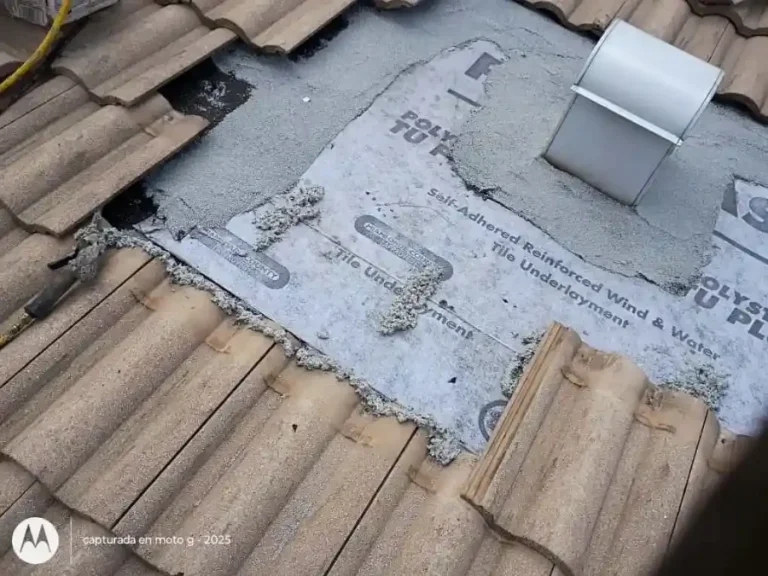
- Cracked underlayment: brittle underlayment that fractured under uplift pressure but didn't tear through entirely. Shows up as a slow leak weeks after the wind event.
- Shifted valley metal: flashing in roof valleys can shift a fraction of an inch during high uplift forces. Invisible from the ground. Water channels directly into the structure on the next rain.
- Lifted ridge caps: the ridge cap row is the most vulnerable point on any roof. Even if the caps didn't blow off, they may have partially lifted and reseated with compromised adhesion.
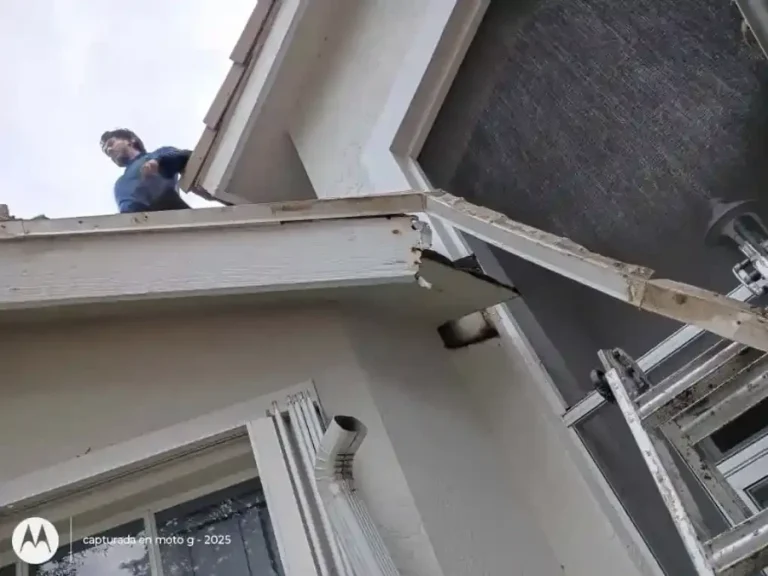
- Gutter separation: overfilled gutters create leverage against the fascia board. Even if the gutters look intact, the fascia attachment may be compromised — creating a path for water to enter behind the soffit.
The rule of thumb we use: inspect every roof within 72 hours of any wind event exceeding 50 mph. Not from the ground — from the roof. You're looking for lifted edges, broken seal strips, shifted flashing, and cracked ridge caps. The inspection takes 20 minutes. The leak it prevents takes 6 months to find and $8,000 to fix.
How 6-Nail Installation Protects Your Roof Against Santa Ana Winds
Standard shingle installation per manufacturer specification uses 4 nails per shingle. In most American markets this is sufficient. In Santa Ana — directly in the path of a documented high-wind phenomenon — 4-nail installation is marginal at best.
A 6-nail pattern distributes the load differently — more fastening points means the uplift pressure created by the eave vacuum effect is resisted across more attachment points. Third-party testing in high-wind building code research has shown approximately 40% better blow-off resistance with a 6-nail pattern compared to 4-nail in sustained 60+ mph wind conditions.
Every shingle replacement we do in Santa Ana uses the 6-nail pattern. When you're getting quotes for shingle work — whether repair or replacement — ask specifically: what nail pattern do you use? Any contractor who doesn't immediately say “6-nail in this market” either doesn't know the local conditions or is cutting corners on installation time.
Santa Ana Wind Season — When It Happens and What to Watch
The primary Santa Ana wind season runs October through February, with peak events typically occurring in October–November and again in January. The National Weather Service issues wind advisories and red flag warnings when conditions align — these are publicly available and we monitor them throughout the season.
August (Before Season)
Best time to get a pre-season inspection and address any vulnerabilities before October. Contractor demand is lower, scheduling is faster.
Oct–Feb (Active Season)
10–25 separate wind events per year. After any event exceeding 50 mph, inspect within 72 hours for the hidden damage described above.
March–July (Off-Season)
Best time for non-emergency replacement or repair. Lower contractor demand, faster permits, and you'll be fully protected before the next season begins.
Santa Ana Winds Roof FAQ
How fast do Santa Ana winds get and how does that compare to a hurricane?
Major Santa Ana wind events sustain at 40–60 mph with gusts recorded above 80 mph in the Santa Ana Canyon and River basin corridor. A Category 1 hurricane begins at 74 mph sustained — so the strongest Santa Ana wind gusts approach that threshold. The key difference is duration and direction: Santa Ana winds can sustain for 12–36 hours, creating cumulative fatigue on roofing fasteners and seal strips that a brief tropical storm gust doesn't produce.
My tiles are all still there after the wind event — does that mean my roof is fine?
Not necessarily. Tile roofs can sustain significant underlayment damage and cracked field tile without any tiles blowing off — especially if the tile profile is interlocking or has high mechanical attachment. The underlayment beneath the tile is the waterproofing membrane. Brittle, pre-existing underlayment can fracture under the pressure differential of a major wind event without the tile showing any outward sign. A professional inspection — not a ground-level visual — is the only way to know.
How many Santa Ana wind events happen each year?
The National Weather Service Los Angeles tracks Santa Ana wind events annually. In a typical season (October through February), Orange County experiences between 10 and 25 separate wind events of varying intensity. Major events — those producing widespread structural damage — occur roughly 2–5 times per year. Cumulative effects from 10+ events per season are what really age a roof in this market, even if no single event is catastrophic.
Is wind damage covered by homeowners insurance in California?
Sudden wind damage from a documented event — missing shingles, displaced tiles, structural damage from blown debris — is typically covered under standard California homeowner policies, subject to your deductible. Cumulative wear accelerated by wind over multiple seasons is generally not covered as sudden damage. The critical factor is documenting that specific damage occurred during a specific, dateable wind event. We provide written assessments with dates, event context, and photographs that establish this timeline for insurance purposes.
Schedule a Post-Wind Inspection — 72-Hour Window Matters
Free inspection. Written damage assessment for insurance. Same-day emergency response available. CSLB C-39 Licensed · 92701 · 92703 · 92704 · 92705 · 92706 · 92707 · 92708