Orange County Roofing Permit Guide — Everything Santa Ana Homeowners Need to Know
Most Santa Ana homeowners find out they needed a roofing permit after the job is already done — usually when they try to sell the house and the title company or buyer's inspector flags unpermitted work. That conversation is painful and expensive. This guide tells you everything upfront, so you don't end up there.
This applies everywhere in Santa Ana — Floral Park (92706), Delhi and Willard (92703), South Coast Metro (92707), Washington Square (92704), Meredith Parkwood and Cabrillo Park (92705), and French Park (92701). The City of Santa Ana Building and Safety Division handles permits for all residential roofing in 92701, 92703, 92704, 92705, 92706, 92707, and 92708.
Do You Need a Permit to Replace Your Roof in Santa Ana?
Yes — for any full roof replacement in Santa Ana, you need a permit from the City of Santa Ana's Planning and Building Agency. This is not optional, negotiable, or something you can skip to save time. Under California Building Code and City of Santa Ana municipal ordinance, a roofing permit is required whenever you replace or substantially re-roof a structure in the city limits.
The practical question most homeowners have is: what exactly triggers a permit? Here's the line:
Permit Required
- Full roof replacement — any material, any size
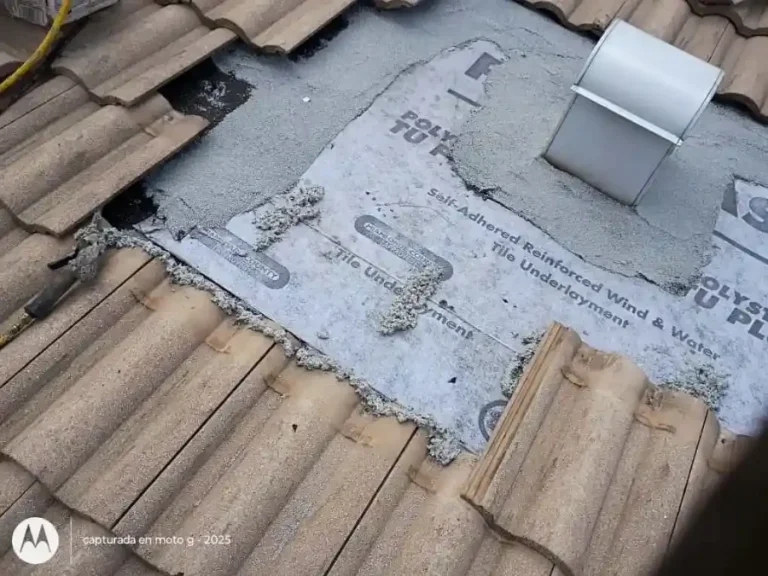
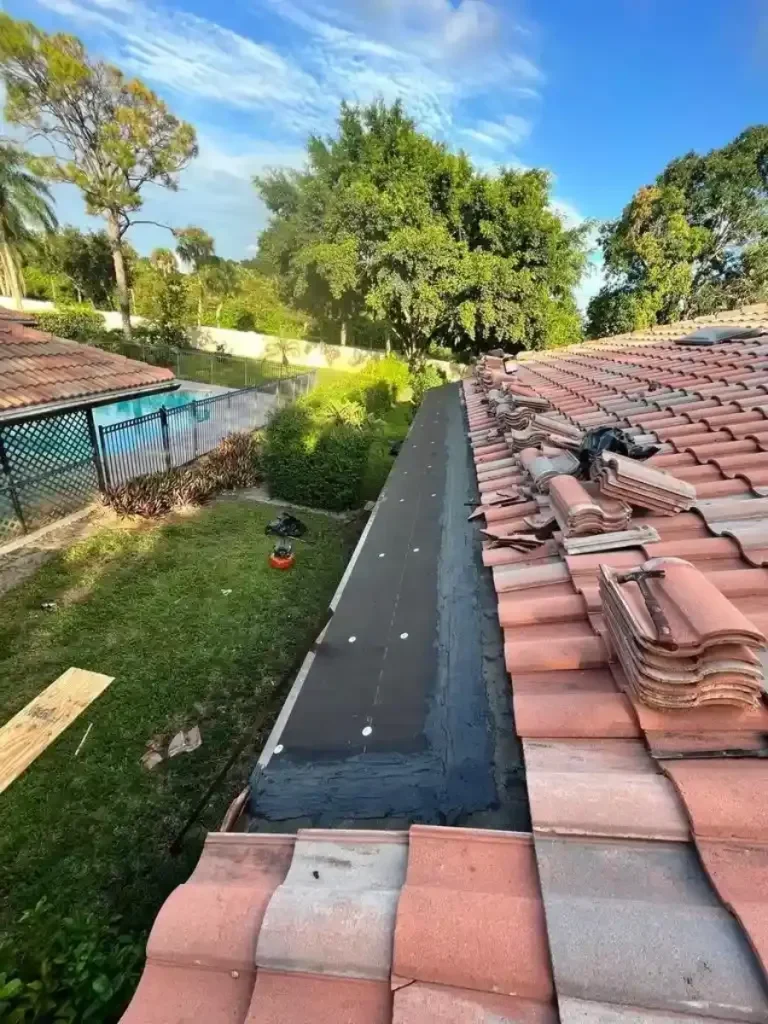
- Underlayment replacement (tile relay jobs)
- Any repair covering more than 100 sq ft (one square)
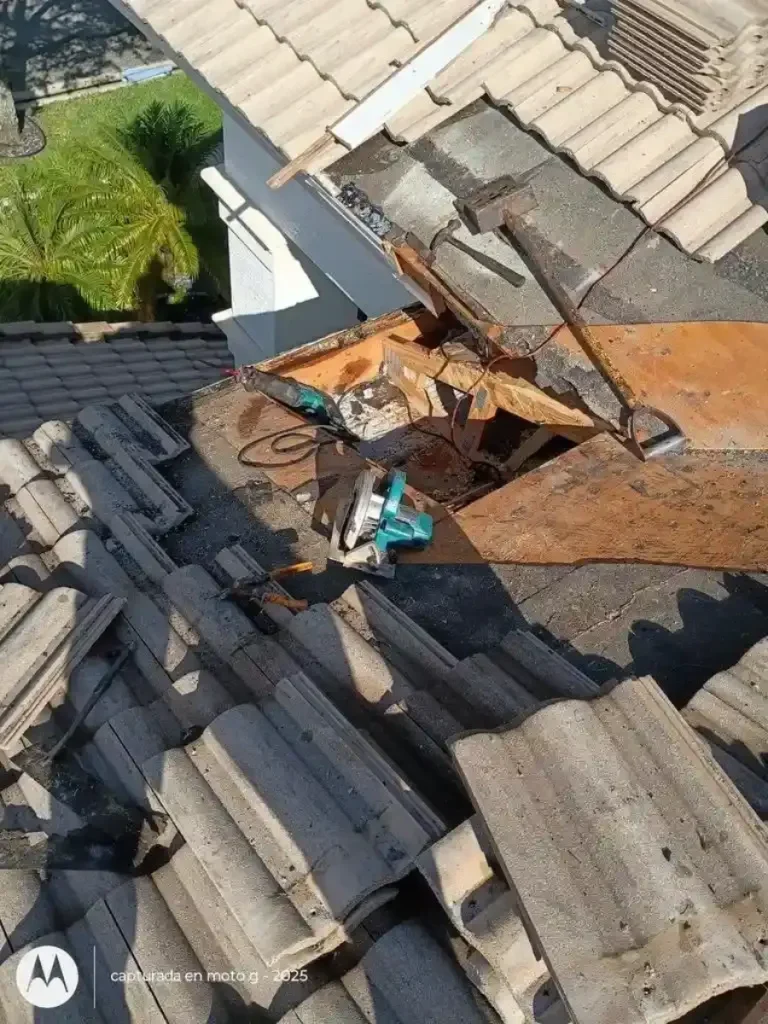
- Any work that disturbs or replaces the decking
- Re-roofing over existing material (overlay)
No Permit Generally Required
- Repair of fewer than 100 sq ft — minor tile replacement, localized flashing repair
- Emergency tarping after a wind event
- Gutter cleaning or roof cleaning (no roofing material touched)
- Roof inspection (no work performed)
What the Orange County Roofing Permit Actually Costs
The permit fee for a standard residential roof replacement in Santa Ana is approximately $207. This fee goes to the City of Santa Ana's Planning and Building Agency and covers the administrative processing of the permit, plus the cost of two city inspector visits during the project.
This is your contractor's responsibility to pull — not yours. When we give you an estimate, the $207 permit fee is included as a line item. We submit the application, we manage the scheduling with the City inspector, and we hand you the finalized permit documentation when the job is complete. If a contractor quotes you a price that doesn't include the permit — ask them why. Every roofing contractor in Santa Ana is required to pull OC building permits — here is exactly how that process works.
The Orange County Permit Process — What Happens Step by Step
- Permit application submitted by your licensed contractor to the City of Santa Ana Planning and Building Agency — typically 1–3 business days before work begins. We include project description, contractor license number (CSLB C-39), property address, and scope of work.
- Permit issued — once approved, work can begin. The permit card must be posted visibly at the job site during construction. This is a City requirement.
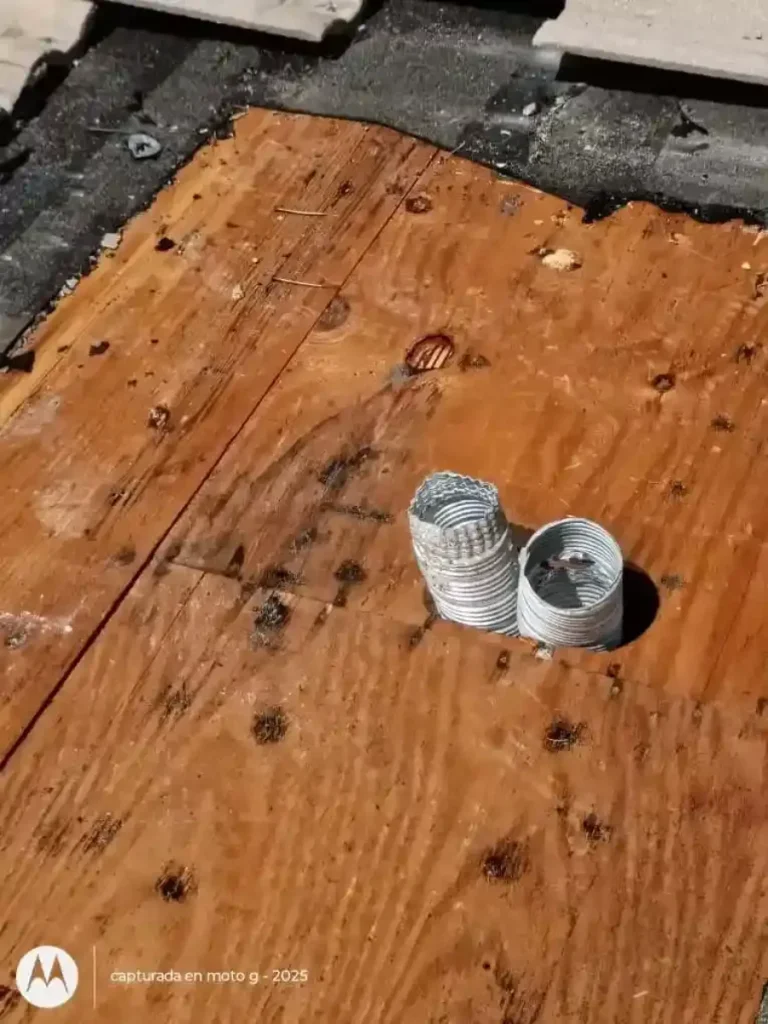
- Sheathing inspection — after tear-off is complete and any decking work is done, but before new underlayment goes down, the City inspector visits. They verify the decking condition, confirm any decking repairs were done correctly, and check all plumbing vent and mechanical penetrations. We call this in, we schedule it, and someone from our crew is on site for it.
- Underlayment and installation continue — once the sheathing inspection passes, underlayment goes down and primary roofing material is installed.
- Final inspection — after the roof is 100% complete, the City inspector visits again. They check the entire finished roof: material installation, flashings, ridge, valleys, eave details. This is the sign-off that closes the permit.
- Permit documentation delivered to you — we provide the completed permit card and inspection records. Keep these with your property records. You'll need them when you sell.
The sheathing inspection is the most important step in the permit process. It's when the City gets eyes on the decking condition before it's covered up forever. We've had situations where the inspector found rot or water damage we didn't flag — and vice versa. The point is that an independent set of eyes confirms the work is being done correctly before the roof closes up. That's the value of the permit, beyond just the legal compliance. OC permits are required on all roof replacements — we pull permits on every job.
What Happens If You Skip the Permit
Some contractors offer to skip the permit to move faster or appear cheaper. Here's what you're actually agreeing to when you go along with that:
- Resale problems: Unpermitted work shows up in title searches and home inspection reports. Buyers require it to be remediated — sometimes requiring tear-out and redo at your expense — or adjust their offer price down significantly. We've seen deals killed over this.
- Insurance issues: Some homeowner policies exclude coverage for damage caused by work done without required permits. If your unpermitted roof fails and water damages your interior, your insurer may deny the claim.
- City enforcement: The City of Santa Ana can require you to expose and redo unpermitted roofing work. The stop-work order and retroactive permitting process costs far more than the original permit would have.
- No CSLB recourse: If the work is unpermitted and something goes wrong, your ability to file a CSLB complaint and get remediation is significantly limited. You've removed the legal framework that protects you.
- Code compliance gap: The 2025 California Energy Code and Building Standards apply to all permitted work. Work done without a permit can fall outside current code requirements — creating a liability if the roof causes damage.
Title 24 and the 2025 California Energy Code — What Changes With a New Permit
Any permit filed after January 1, 2026 is subject to the 2025 California Energy Code (Title 24, Part 6). For most Santa Ana residential roofing, the practical impact is limited — steep-slope roofs (2:12 pitch or greater) in Orange County's Climate Zones 6 and 8 are generally exempt from prescriptive cool-roof requirements for asphalt shingles. However, two situations do trigger specific requirements:
- Flat or low-slope roofs (less than 2:12 pitch): Must use CRRC-rated cool-roof materials regardless of climate zone or location in California. This affects Downtown Santa Ana commercial buildings, loft conversions, and any home addition with a low-slope section.
- Re-roofing with a new material type: Switching from a lighter material to a heavier one (e.g., adding concrete tile to a home previously roofed with shingles) may trigger structural review for load capacity — particularly relevant in older Santa Ana neighborhoods like Willard and Delhi where pre-1960 framing is common.
OC Roofing Permit FAQ
How long does it take to get a roofing permit in Santa Ana?
Standard residential roofing permits in Santa Ana are typically issued within 1–3 business days of application. The City of Santa Ana Planning and Building Agency processes most residential permits over the counter or electronically. We factor this into your project timeline and schedule the start date accordingly — there's no reason a permit should delay your project by more than a few days.
Is my contractor responsible for the permit or am I?
Your licensed contractor is responsible for pulling the permit. Under California law, a CSLB C-39 licensed contractor performing roofing work is required to obtain all necessary permits before beginning work. If a contractor asks you to pull your own permit, or asks you to be the owner-builder of record to avoid their having to pull it, that is a major red flag. It shifts the legal liability of the project to you and defeats the purpose of hiring a licensed contractor.
What happens during the roofing permit inspection?
Two inspections are required. The sheathing inspection occurs after tear-off — before any new underlayment is installed. The inspector visually checks the exposed decking for rot, moisture damage, and structural integrity, and verifies all penetrations (plumbing vents, electrical masts) are properly detailed. The final inspection occurs when the roof is 100% complete — the inspector checks material installation, flashing at all penetrations, ridge and hip details, and eave conditions. Both must pass before the permit is closed.
I bought a house with an unpermitted roof — what are my options?
You have a few paths. Option 1: apply for a retroactive permit through the City of Santa Ana Planning and Building Agency — this typically requires exposing some of the work for inspection and may require bringing it up to current code. Option 2: if you're replacing the roof anyway, the new replacement will generate a permit and close the gap going forward. Option 3: disclose it as a known defect in future sale. The best path depends on the age of the unpermitted work and how close to replacement the roof actually is. Call us for a free assessment — we'll tell you what makes sense.
Free Estimate — We Pull the Permit, You Don't Manage Anything
CSLB C-39 Licensed · OC Permitted Every Job · Written Itemized Estimates · 92701 · 92703 · 92704 · 92705 · 92706 · 92707 · 92708