Pre-Santa Ana Wind Season Roof Preparation — 7-Step Checklist
August is the month most Santa Ana homeowners aren’t thinking about their roof. Wind season doesn’t start until October. That’s exactly why August is the right time. By the time you notice something wrong in November, every good contractor in Orange County is booked solid, material lead times are long, and you’re staring down the most active part of the wind season without a protected roof. Do this now. Learn how Santa Ana winds damage roofs differently than rain — it matters for what you inspect.
Why the Pre-Wind-Season Window Matters — October to February Isn’t Forgiving
The National Weather Service Los Angeles office tracks Santa Ana wind events year-round. Between October and February, Orange County typically experiences 10–25 separate wind events of varying intensity. Major events — the ones that displace tile, blow off shingles, and strip ridge mortar — occur roughly 2–5 times per season. When they hit, contractors are overwhelmed, permit offices are backed up, and emergency tarping is the only immediate option.
A roof that’s been inspected and properly prepared in August isn’t immune to wind damage — nothing is when you’re in the direct path of an 80 mph event. But a roof with recently serviced flashings, intact seal strips, cleared bird stops, and confirmed underlayment integrity is in a fundamentally different position than one that hasn’t been touched in three years. The goal isn’t perfection. It’s making sure your roof doesn’t fail on the first serious event of the season.
The 7-Step Pre-Wind-Season Roof Checklist
Work through this list in August — before contractor schedules fill up and before the first red flag warning of the season arrives. Some of these you can assess yourself from the ground. The rest require a roof inspection.
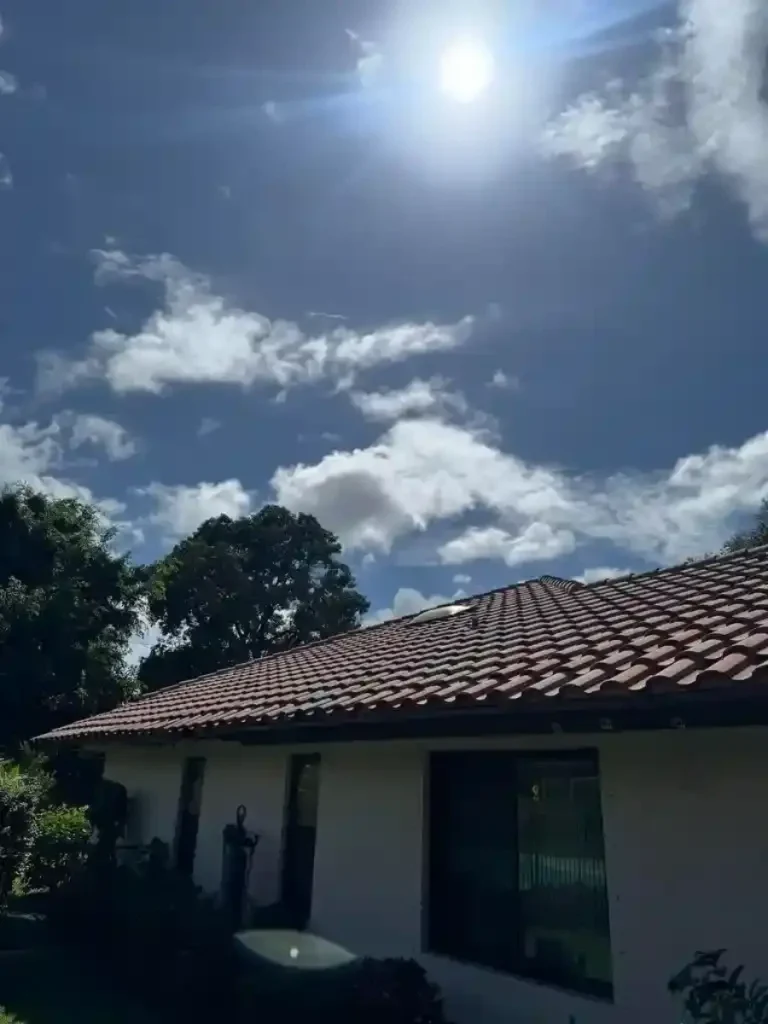
- Check the ridge cap from the ground with binoculars. Look for missing mortar, cracked caps, or sections that appear lifted or out of line. The ridge is the highest-exposure point on any Santa Ana roof — it takes the first and hardest wind load every event.
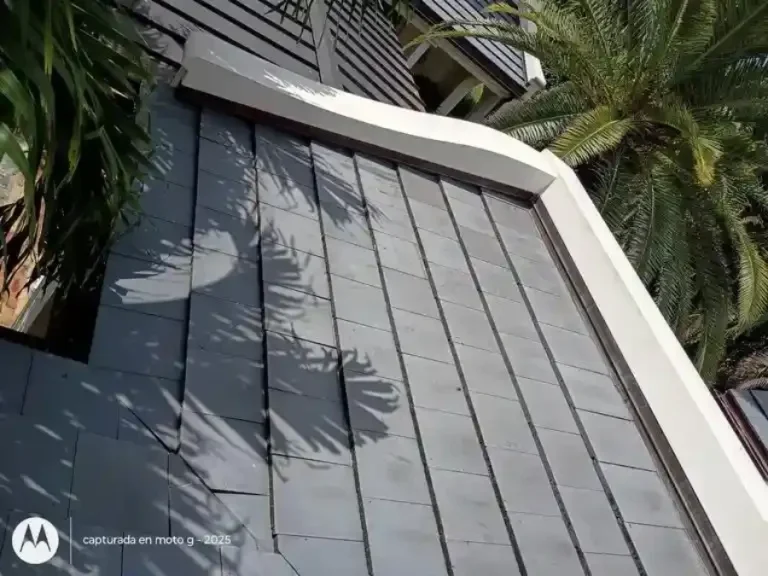
- Look for any slipped or cracked tile visible from the ground. Even one cracked tile is a pathway for water if rain follows the wind event. Any tile with visible daylight through the crack or that sits at a different angle than its neighbors needs attention before October.
- Inspect the gutters and bird stops. Full gutters are a wind-loading problem — the debris creates additional wind resistance and the extra weight can pull the gutter away from the fascia. Bird stops on tile roofs accumulate palm fronds, eucalyptus leaves, and nesting material throughout summer that should be cleared before wind season.
- Look for any lifted or curled shingle edges on asphalt sections. A shingle with a lifted edge has already failed its seal strip. In any Santa Ana wind event over 40 mph, that shingle is a blow-off waiting to happen. This is also the most common thing the AI drone programs flag for insurance purposes.
- Check accessible flashing points from the attic. Go into the attic in daylight and look for any light coming through at chimney, vent pipe, or valley points. Any daylight is a gap — and any gap becomes a leak pathway the first time rain follows a wind event.
- Verify your roof’s documented condition. If you don’t have a written inspection report from the past 2 years, get one before October. If your insurer sends a drone or adjuster to assess a wind claim, having a pre-event inspection report dated before the damage is powerful documentation that the damage was sudden and event-specific — not pre-existing deterioration.
- Know your roof’s age and underlayment status. If your tile roof is over 15 years old and you don’t know when the underlayment was last replaced — find out. An underlayment failure during a wet winter following a dry wind season is the worst-case scenario for interior water damage in Santa Ana. The winds dry and fracture the underlayment. The rain exploits it.
Which Santa Ana Neighborhoods Need to Be Extra Prepared
Wind exposure in Santa Ana is not uniform. If you’re in one of these neighborhoods, pre-season preparation isn’t optional — it’s essential:
Highest Priority
Willard, Delhi, Washington Square — in the direct Santa Ana River basin wind corridor near the 55 freeway. These neighborhoods take the hardest sustained wind loads in the city. Any roof over 12 years old in these neighborhoods should be inspected before October. No exceptions.
High Priority
South Coast Metro, Meredith Parkwood, Cabrillo Park — 1960s–70s housing stock with concrete tile roofs where underlayment aging is the primary concern. Summer is the right time to confirm underlayment status and address any deferred maintenance before the wet-wind cycle begins.
Don’t Skip Either
Floral Park, French Park, Park Santiago — tree canopy provides some buffering but the pre-1960 housing stock in these neighborhoods often has original roofing components that were never engineered for modern wind loads. Historic properties especially need pre-season assessment.
Pre-Wind Season FAQ — Santa Ana
When is the best time to schedule a pre-wind-season roof inspection in Santa Ana?
August is ideal. Contractor demand is relatively low after the summer heat slows homeowner decision-making, and you have enough lead time to complete any repairs or maintenance before the first October wind events. By September, contractors start booking up for wind season. If you call us in late September or October, we’ll do our best — but August gives you the best scheduling flexibility and the lowest urgency pressure.
What’s the most important thing to fix before Santa Ana wind season?
In order of urgency for most Santa Ana homes: (1) Ridge cap mortar — if any section is cracking or missing, that’s the first thing wind will exploit. (2) Lifted shingle edges or broken tile — any breach in the primary surface needs to be sealed before the wet-wind cycle begins. (3) Flashing at vent pipes and chimney — these are the most common leak points and the quickest to fail under combined wind and rain conditions. (4) Bird stop and gutter clearing — structural issues first, then maintenance.
Should I document my roof’s condition before wind season starts?
Yes — and this is genuinely important for insurance purposes. A written inspection report dated in August, before any wind damage, establishes a documented baseline for your roof’s condition at the start of the season. If a wind event then causes damage and you file an insurance claim, the pre-event inspection report demonstrates that the damage was sudden and event-specific — not pre-existing deterioration that your insurer could argue was already present. We provide this report as part of every free inspection.
Book Your Pre-Wind-Season Inspection — August Fills Fast
Free inspection · Written report included · CSLB C-39 Licensed · 92701 · 92703 · 92704 · 92705 · 92706 · 92707 · 92708
Santa Ana Wind Season Roof Checklist — Your September Walk-Through
Every September, before the first Diablo or Santa Ana wind event of the season, we run the same checklist on every job we assess. You can do a version of this yourself from the ground — and flag anything suspicious for a licensed contractor to look at before wind hits.
From the Ground: What to Look For
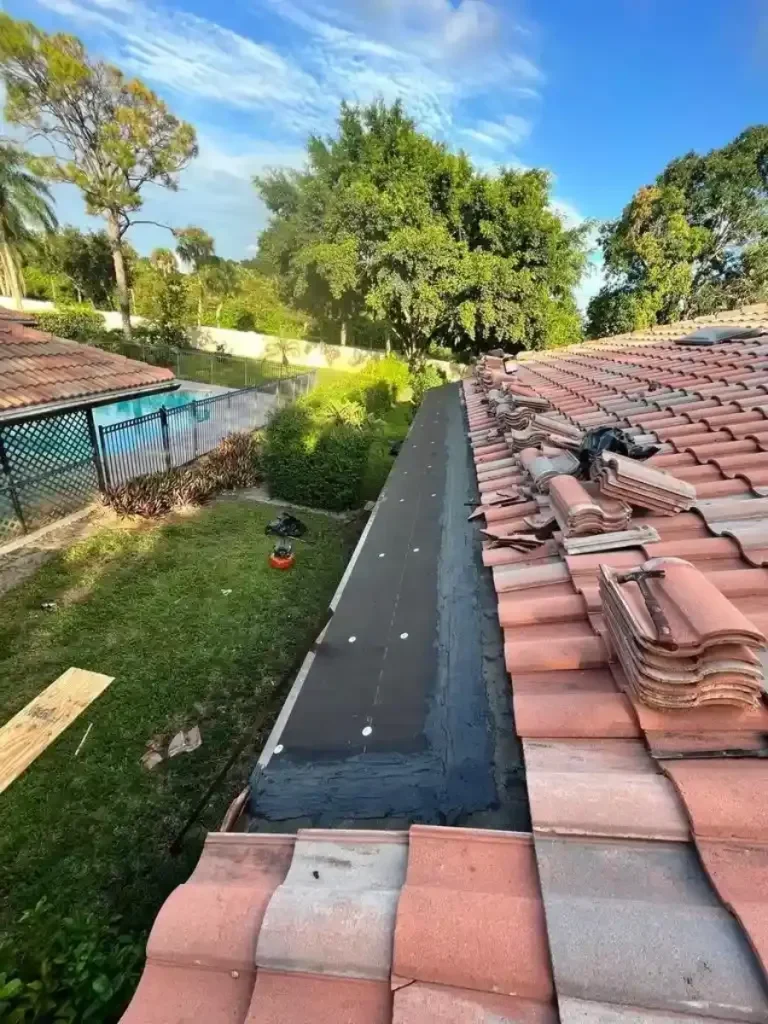
Walk the perimeter of your home in Floral Park, Delhi, South Coast Metro, or whichever Santa Ana neighborhood you are in. Look for cracked or slipped ridge tiles — they are the first to go in a wind event because ridge mortar dries out faster than field tile. Look for missing or lifted hip tiles on the corners. Look for debris buildup in the valleys — leaves and debris retain moisture against the underlayment and accelerate failure. Look for any exposed tar paper or felt visible from the edge — that means a tile has already shifted or fallen.
The 5 Points a Licensed Inspector Checks That You Cannot See From the Ground
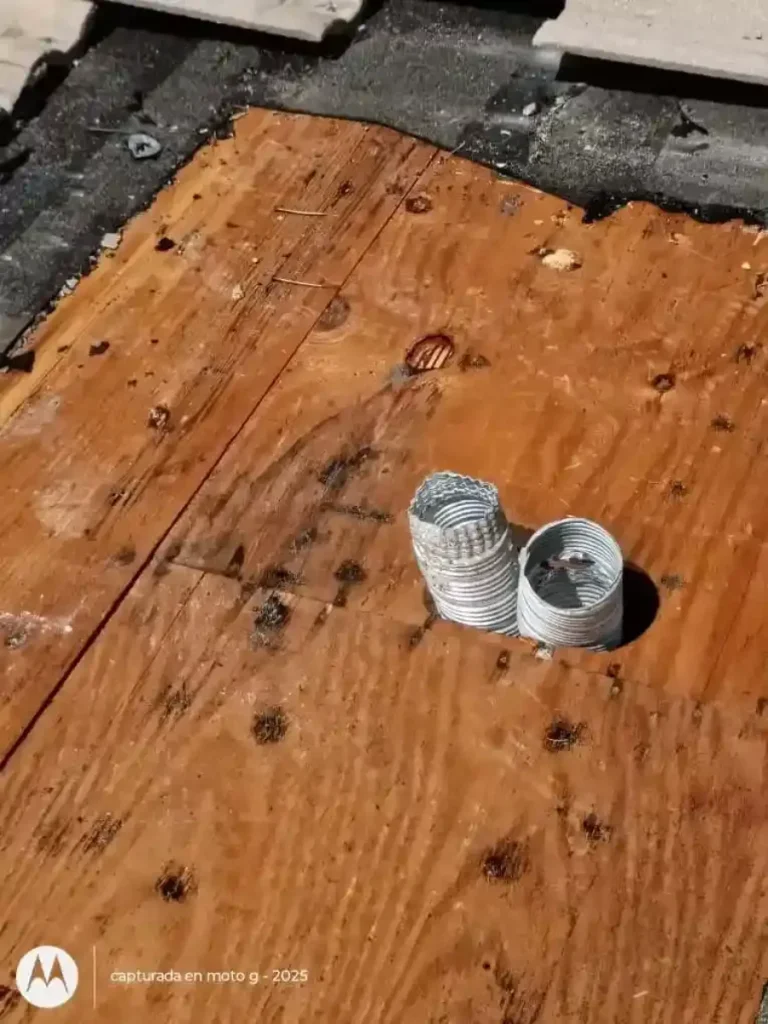
Chimney base flashing condition — the #1 cause of Santa Ana roof leaks, invisible from street level. Pipe boot seals — rubber boots degrade faster in OC heat than any other roofing component. Valley metal laps — improper laps allow wind-driven rain to travel uphill under tiles. Bird stops — broken bird stops at the eave allow wind to get under the bottom tile course and lift it. Deck condition at penetrations — every vent, every pipe, every fixture is a weak point where decking fails first.
Zip Codes We Cover for Pre-Wind Inspections
We cover every Santa Ana zip code for pre-wind roof inspections: 92701, 92703, 92704, 92705, 92706, 92707, and 92708. We also cover adjacent Orange County communities where the same wind pattern applies. Book a September inspection now — our schedule fills by mid-September every year without exception.